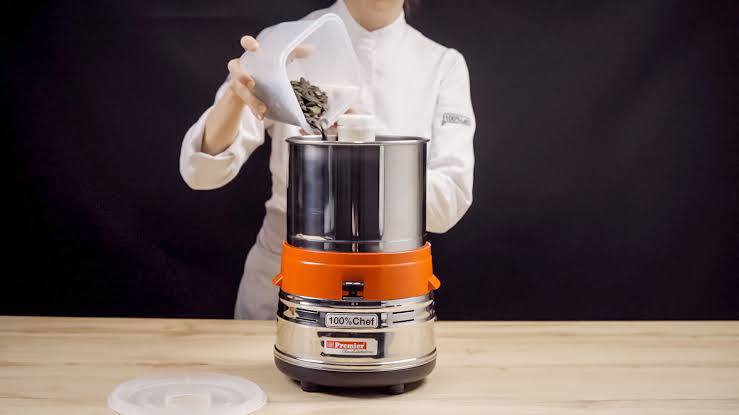

How often should you wash a melanger for chocolate and nut butters?
How often should you wash the melanger?
Equipment cleanliness is a key factor in the quality and safety of the finished product. But is it necessary to wash the melanger after every batch? Not always. Let’s take a look at when washing is required and when it can be postponed.
When is it absolutely necessary to wash a melanger?
When switching from one product to another. For example, if you’ve made peanut butter and then plan to make milk chocolate, you need to wash the melanger thoroughly. Unless, of course, you want a hint of peanut flavor in your chocolate. But it’s not just about the taste: residue from the previous product could trigger an allergic reaction due to undeclared ingredients.
When dirt appears. If you notice dust or other foreign contaminants that could affect the quality or safety of the product, the equipment must be cleaned.
After being left unused for a long time in a dirty condition. If the melanger has been left standing for a long time with product residue inside, there is a risk that the fats will go rancid. In that case, be sure to wash it before using it again.
Do you need to wash the melanger after each unloading?
If you continuously produce the same product using the same recipe, it is not necessary to clean the equipment after each batch.
If the production cycle runs smoothly—loading, grinding, unloading, and the next loading—the melanger can be cleaned once every two or three loads. The most important requirement is cleanliness on the production floor.
What else should you keep in mind?
Monitor the condition of the melanger's parts and components that are not directly immersed in the product.
Even if the production area is kept clean, it is practically impossible to completely eliminate fine dust. It will still settle on the surfaces of equipment parts, albeit in small quantities.
Remember: Timely and proper cleaning of the melanger helps maintain consistent product quality and ensures the safety of the finished product.