
A Brief History and Classification of Melangers
A Brief History and Classification of Melangers.
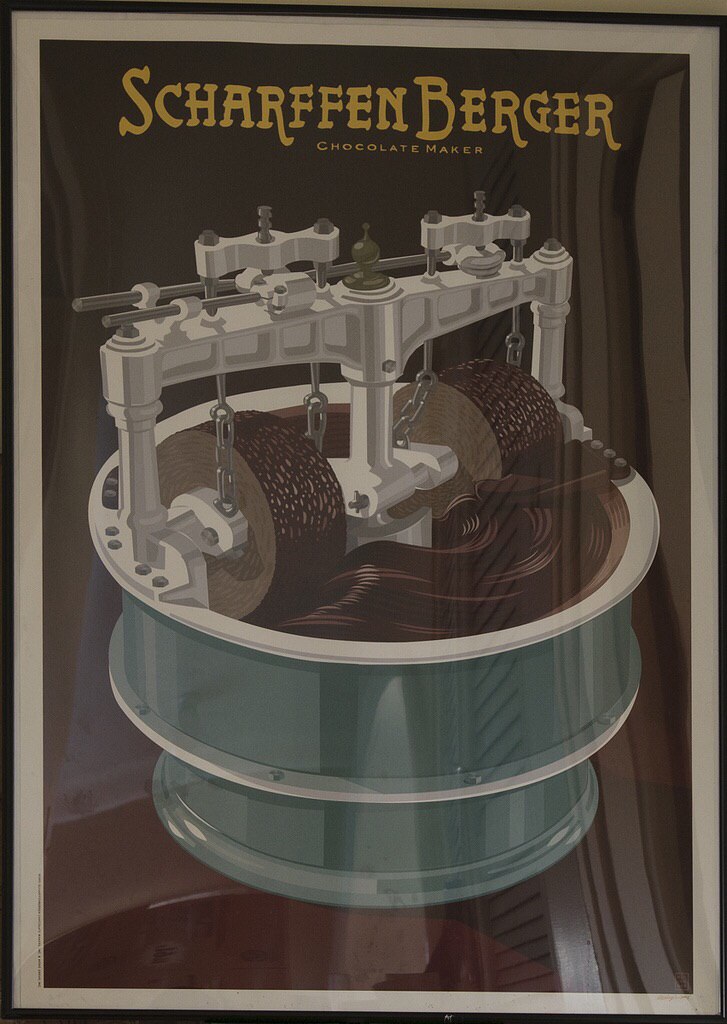
In 1883, Swiss chocolatier Philippe Suchard invented the melanger, which enabled the production of 50 percent of all Swiss chocolate. Since then, chocolate has been and continues to be produced on an industrial scale using large, multi-metric-ton melangers. Although recently, they have been rapidly replaced by ball mills, which grind cocoa using metal balls.
Melangers for home use began to be manufactured in India around 1955.
All modern melangers can be divided into two main groups.
1. Melangers designed for Indian cuisine.
Simple vegetarian, vegan, and raw food dishes; they are also somewhat suitable for nut butters (urbech). These include the Dream Classic MDC-01 (Prestige Wet Grinder PWG 02) and other inexpensive Indian melangers. They are not suitable for chocolate, as they are not designed for prolonged continuous operation exceeding 1.5–2 hours. Longer operation leads to overheating of the ingredients and the melanger itself, resulting in the melanger breaking down.
2. Melangers for any purpose, including chocolate production, which are in turn divided into three subgroups.
a. Industrial melangers (Kadzama, ALLURE, Sacumi) manufactured in Russia. Designed for high-volume production, they ensure maximum reliability and productivity.
b. Melangers for small- and medium-scale artisanal production (Premier Lifestyle Pro, Wonder Pro, Spectra 11)—originally Indian models—were modernized in the United States by Indian immigrants to meet the needs of the U.S. market and to supply higher-quality equipment designed for chocolate production in Europe, including Russia.
c. Entry-level melangers. The standard Premier Lifestyle and Wonder models manufactured in India, as well as other Indian melangers capable of operating continuously for 6 hours—which is the minimum time required to produce high-quality cocoa mass, not counting the time needed for further conching.