

Pre-order MOLINILLO
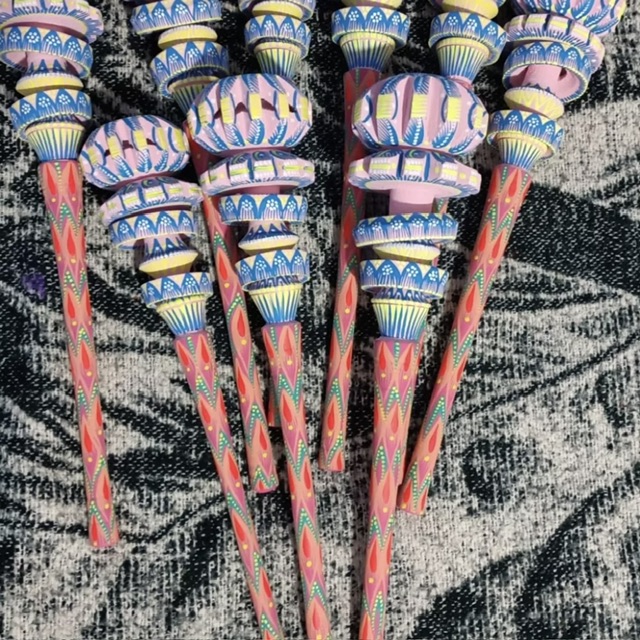
We are now accepting pre-orders for MOLINILLO (Molinillo)—special wooden whisks for whipping cocoa.
The first batch will look just like the picture—only 5 pieces in total. It’s a very beautiful item, suitable both as a decorative piece and as a tool for cacao rituals. This is a large molinillo, approximately 36 cm. And here’s a bit of history:
Imagine that this drink, so beloved today, wasn’t always popular with everyone. And the English privateer Francis Drake, when attacking Spanish merchant ships, would even throw sacks of cocoa beans overboard! Fortunately, some ships still managed to slip past him, and cocoa made its way to Europe.
If we were to find ourselves in 16th-century Mexico, when the Spanish colonizers arrived there, we would surely be surprised to find that only a few people drank it. Unlike the Maya, the Aztecs did not grow cacao beans because the climate was too dry. They obtained the prized beans primarily as tribute from conquered tribes, so only the very wealthy indigenous people could afford cocoa. It was also used in rituals. For example, Aztec warriors believed it could give them strength and tried to drink a cup before battle.
But that invigorating elixir was a far cry from the sweet hot chocolate we’re used to. It was made from cacao beans and water, with chili peppers added. The drink turned out bitter and astringent. Before serving, it was quickly poured back and forth several times from one container to another until a foam formed—a foam that was considered the embodiment of chocolate’s spiritual essence and was considered essential.
The Spaniards did not like the drink, but they recognized its value. It is believed that they invented a special stick for whipping up foam—the molinillo. They would lower the tool’s pointed end to the bottom of the vessel, while holding the other end between their palms and rotating it rapidly. Foam gradually formed, eliminating the need to decant the drink.
In the 16th century, cocoa made its way to Europe, where the recipe changed. Chili peppers were replaced with vanilla, sugar or honey began to be added to the drink, and the beans were heated to help them dissolve more easily. The foam became optional.
However, in Mexico, the molinillo survived even after the population converted to Christianity. Moreover, the tool spread to some other Latin American countries and is still used today. It is mainly used to prepare hot chocolate, cocoa, and champurrado—a hot beverage made from corn kernels that contains melted chocolate in addition to cornmeal and brown sugar.
Melangeur.ru