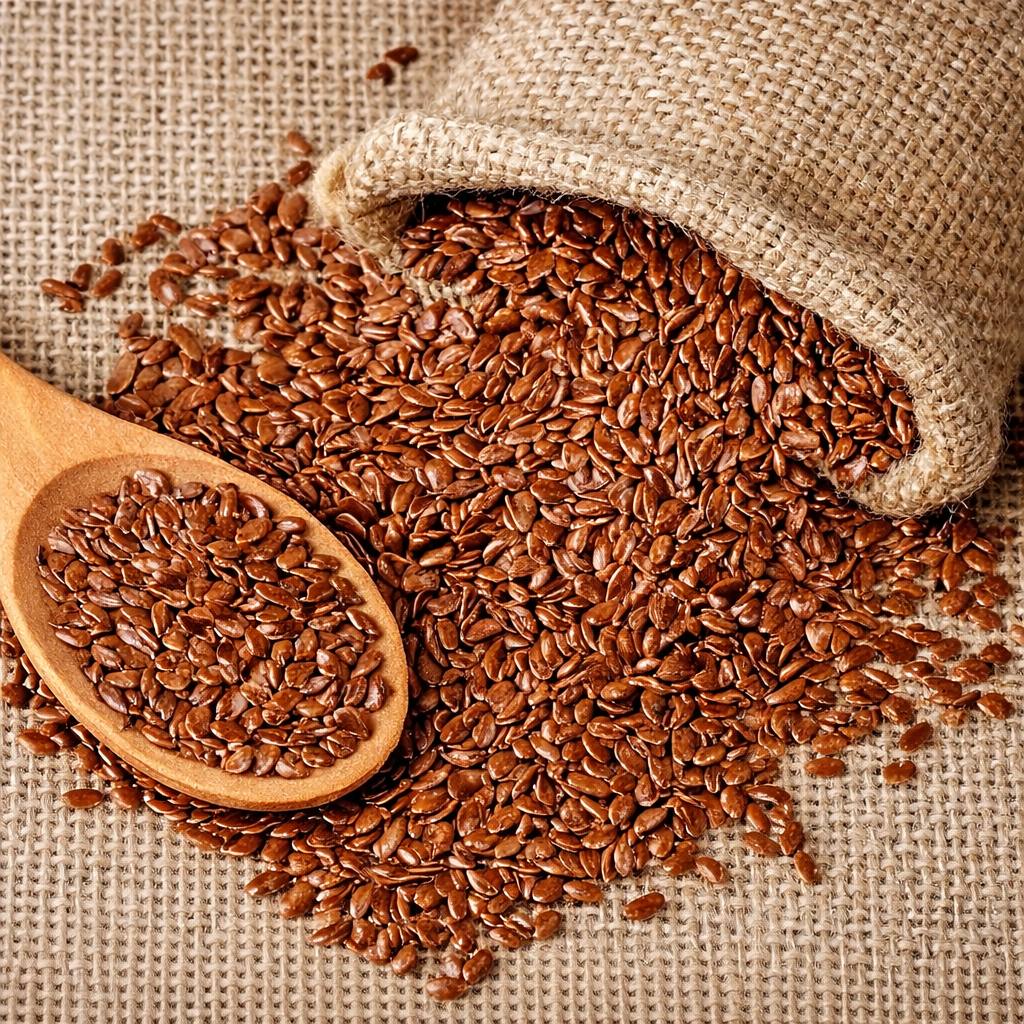

Should you wash flax seeds before putting them in the melanger?
Should you wash flax seeds before adding them to the melanger?
Technically, this is possible, but in practice it’s quite inconvenient. If the raw material is heavily contaminated, it really does need to be rinsed and then dried very thoroughly before being loaded into the melanger. The problem is that when flaxseeds come into contact with water, a slimy film forms on their surface, which makes drying a long and difficult process. Therefore, it’s much easier to purchase well-cleaned raw materials from a reliable supplier from the start.
Before cooking, it is recommended to heat-treat the flaxseeds. The simplest method is to warm them in the oven at 150 °C for 5–7 minutes. This is necessary to reduce the risk of contamination of the raw material by microorganisms, larvae, and other undesirable impurities.
Some believe that this processing partially reduces the health benefits of flax. It is possible that certain changes do occur, but they are by no means significant. Furthermore, for many people, flax urbech is valued not only for its health benefits but also for its distinctive flavor.
You might wonder: doesn’t the product heat up to a temperature high enough for pasteurization during prolonged grinding in a melanger? Unless we’re talking about raw urbech, where the mixture heats up to about 65 °C during grinding, this does indeed result in partial pasteurization. However, this heating does not ensure the complete destruction of all microorganisms. Therefore, it is safer to lightly roast the flaxseed in the oven first and then put it in the melanger.
In short:
It’s best not to wash flaxseed; instead, choose high-quality, well-cleaned raw material right from the start. However, if it’s essential for you to keep the product as “live” and raw as possible, you should consider other ingredients that are easier to rinse and dry more quickly. Heating urbech in a melanger to 65 °C does not guarantee complete microbiological safety, so pre-heat treatment of the seeds remains a more reliable solution.