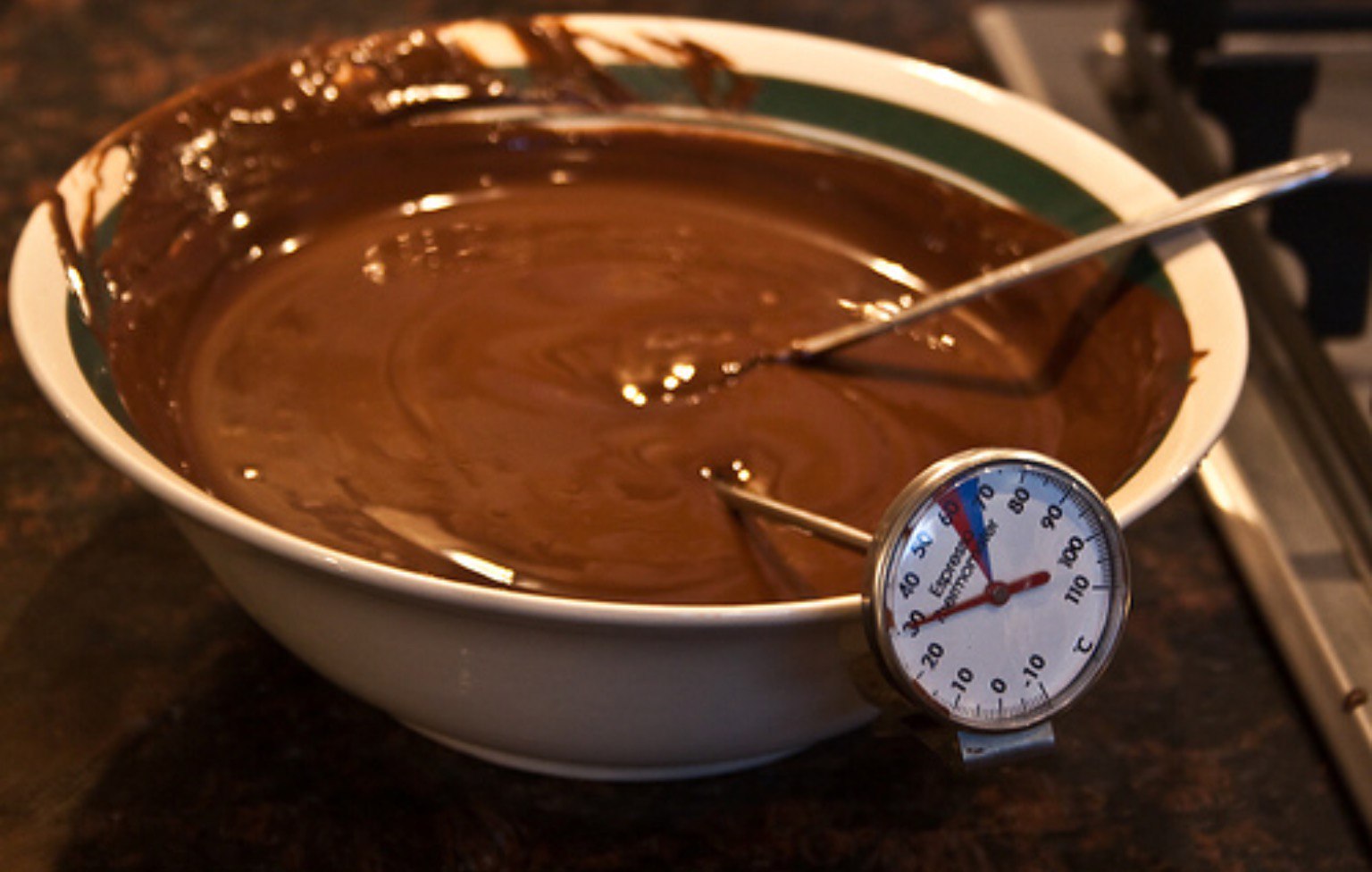
Tempering Chocolate on a Raw Food Diet. Part 4
RECOMMENDATIONS FOR TEMPERING CHOCOLATE
Protecting Chocolate from Moisture. Even the tiniest particles of water can ruin chocolate. Melted chocolate contains virtually no moisture, so if even a single drop gets into it, the following problems may occur:
1. The sugar in chocolate reacts with water, causing syrup to form.
2. The syrup is usually quite sticky and acts as a glue for the solid components of cocoa, causing them to clump together. As a result, the chocolate loses its fluidity and turns into a lumpy, grainy paste.
Moisture can get into chocolate in several ways:
1. Double boiler. Water from a double boiler splashes very easily, and individual drops can fall over the edge of the cup or saucepan into the chocolate. In addition, steam rises from the heated water, which can also cause the chocolate to clump. When using a double boiler, it’s important to remember to always wipe the bottom of the cup containing the chocolate dry.
2. Wooden kitchen utensils. All wooden kitchen utensils, including wooden spoons, wooden bowls, cutting boards, etc., may contain residual moisture and transfer it to the chocolate. For this reason, many pastry chefs prefer to use rubber or silicone kitchen utensils, metal bowls, and marble surfaces.
3. Lids. It is important never to cover hot chocolate with a lid, because the heat from the chocolate can cause condensation to form inside a covered cup.
Operation within the correct temperature range:
Overheating. Chocolate is extremely sensitive to sudden changes in temperature. Overheating causes the solid particles of the cocoa beans to separate from the cocoa butter, and these particles then begin to “burn.” To avoid overheating, heat the chocolate very slowly and gradually at relatively low temperatures, avoiding exposure to excessively high temperatures or direct heat.
Overcooling. When the temperature of the chocolate drops below 27°C, too many Type III crystals—or lower—form, and the chocolate does not set properly.
Handle with care.
Melted chocolate doesn't like being exposed to anything cold. Using a cold metal spoon to stir it, adding cold flavorings, or even using a cup that's too cold will make the chocolate grainy and cause it to instantly turn into a dense, solid lump. All ingredients and utensils should be at room temperature.
Hardness Test.
An easy way to check if raw chocolate has been tempered is to apply a small amount to a piece of paper or the tip of a knife. If the chocolate has been tempered correctly, it will set evenly and develop a sheen within five minutes.
Меланжер.рф